Car Rental in Geneva: How to Get the Best Deal in Switzerland Without the Headaches
I have rented cars in Geneva more times than I can count, and I still get surprised by the quirks. Car rental in Geneva comes with a twist most first-timers don’t know: the airport sits right on the French border, so you can pick up your car on the Swiss side or walk five extra minutes and rent from the French sector, sometimes for 30 to 40 percent less. That single fact can change your whole budget, and I’ll explain when the trick works and when it backfires.
This guide covers real prices, the companies I’d actually book with, the paperwork Switzerland demands, and the mistakes that cost people money at the counter. Everything here comes from my own rentals plus what I’ve learned watching friends get stung.
What Does Car Rental in Geneva Actually Cost?
Let’s start with numbers, because vague advice helps nobody. In shoulder season (April to early June, mid-September to October), a compact car like a VW Golf or Renault Clio usually runs 35 to 55 CHF per day if you book two or three weeks ahead. In July, August, and around Christmas, that same car can jump to 90 or even 120 CHF a day. I once paid 140 CHF for a one-day rental on December 23rd and I still feel sore about it.
Weekly rates are where you save. A seven-day booking often lands between 210 and 350 CHF for an economy car, which beats the daily rate by a wide margin. Automatics cost noticeably more than manuals here, usually 10 to 20 CHF extra per day, because Swiss fleets skew manual. If you can only drive automatic, book it early. They genuinely run out.
Fuel prices matter for your total budget too. Expect around
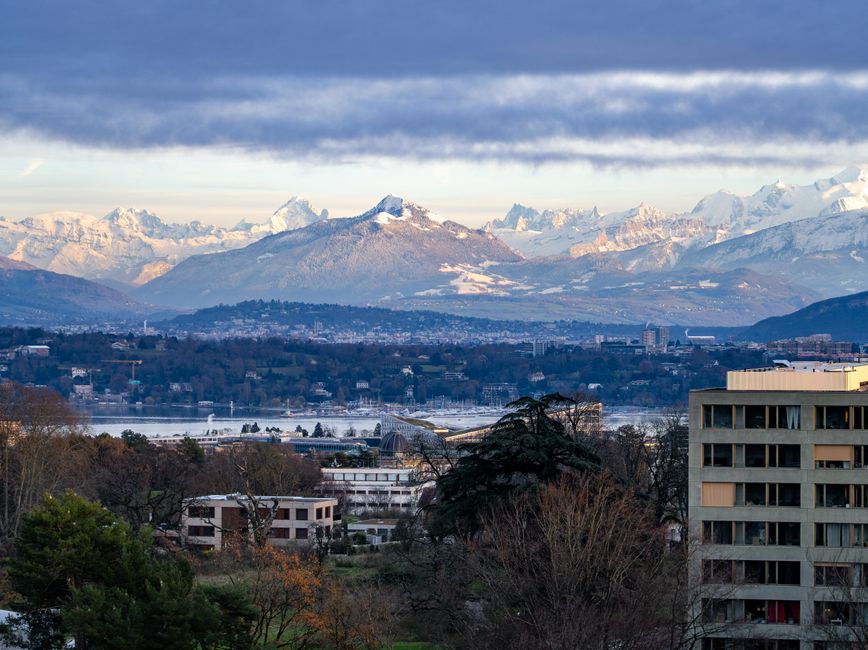
 1.75 to 1.90 CHF per liter in 2024-2025, which is painful, but the distances are short. Geneva to Zermatt is under three hours. Geneva to Chamonix is barely 90 minutes.
Swiss Side or French Side of the Airport: Which Should You Choose?
Geneva Airport is physically in Switzerland but half the terminal drains into French territory. It’s the only major airport in Europe where you can exit into two different countries from the same building, and rental desks exist on both sides.
When the French sector wins
The French sector (walk past the Swiss exit, follow the “Secteur France” signs) often has lower base rates, especially from Europcar and Sixt’s French operations. If you’re heading to Chamonix, Annecy, or anywhere in France, this is a no-brainer. You avoid the Swiss motorway vignette (more on that below) and the French fleet usually includes cars with French plates.
When the Swiss side wins
If your trip focuses on Switzerland, Lausanne, Gruyères, Zermatt, take the Swiss desks. Renting a French-plated car and driving it into Switzerland long-term can raise eyebrows with the rental company and may breach your contract. Also, the Swiss side keeps cars available at odd hours, which matters if your flight lands at 11 pm. The French sector desks close earlier and more often.
One honest note: the price gap has narrowed since 2022. Compare both sides before assuming France is cheaper. Sometimes the Swiss side wins by 15 CHF a day when a promo is running.
The Vignette: Switzerland’s Motorway Sticker Explained
Switzerland charges 40 CHF for a motorway vignette, valid for a calendar year (it actually runs December to January of the following year, so a sticker bought in November lasts 14 months). Most Swiss-side rentals include one on the windshield already. French-side cars almost never do.
Here’s the detail people miss: if you take a French car across the border and drive Swiss motorways without a vignette, the fine is 200 CHF plus the cost of the sticker, and cameras do catch cars. The police in the Geneva region run regular checks at border crossings like Bardonnex and Cornavin-area exits. My advice: if you’ll touch any Swiss motorway, even for 20 minutes toward Lausanne, get the vignette. You can buy it at the border, at garages, or online in advance (the digital version works for cars registered in Switzerland, so for a French rental you need the physical sticker).
Which Rental Companies Are Worth Booking in Geneva?
After several rentals, here’s my honest hierarchy:
- Enterprise and Hertz (Swiss side): reliable, clean fleets, slightly higher prices, but their insurance terms are transparent. Good for nervous first-timers.
- Europcar: solid mid-range option, decent at Geneva Airport, and they tend to forgive small scuffs if you bought their coverage.
- Sixt: best selection if you want something fun (I once got upgraded to a BMW 1 Series for the price of a Golf), but their damage-inspection paperwork is picky. Photograph everything.
- Budget / Avis: fine, nothing memorable, watch for their fuel-charge games.
- Local brokers via Kayak or Discover Cars: often the cheapest headline price, but read the pickup location carefully. “Geneva” sometimes means an off-airport lot 20 minutes away by shuttle.
I’d avoid no-name brokers with zero reviews and prepaid-only rates. Geneva attracts a lot of cross-border traffic, and the cheap operators know exactly how to claw money back through damage claims.
Crossing Borders: France, Italy, and the Fine Print
Almost everyone renting in Geneva wants to leave Switzerland at some point. Chamonix, Annecy, and the Grand St. Bernard pass into Italy are all within an hour or two. The good news: nearly every major company allows cross-border travel within Western Europe for free. The bad news: you must declare it at pickup. If you don’t, and the car gets stolen or damaged in France, your coverage can vanish.
Ask for the cross-border authorization in writing, even if it’s just a line on the contract. It takes 30 seconds. Also confirm the car comes with the Austrian or Italian motorway requirements if you’re heading that way, Austria’s vignette and Italy’s toll transponder are separate purchases.
Insurance and Deposits: Where People Lose Money
This is the part of car rental in Geneva that catches people off guard. Expect a deposit hold of 300 to 800 CHF on your credit card, sometimes more for premium cars. Debit cards are accepted by some desks but not all, and prepaids are almost universally refused. Bring a real credit card in the main driver’s name.
On insurance: Swiss law requires liability cover and it’s included, but the excess (deductible) on damage can be 1,500 to 3,000 CHF. Rental desks will push their own waiver at 15 to 25 CHF a day. My approach: check whether my travel credit card covers rental excess in Switzerland (many do, including some Amex and Visa Infinite products), and if not, buy a standalone excess policy online for the whole trip, usually 40 to 60 CHF a week instead of 150 plus.
The inspection ritual
Do this every time. Film a slow walk-around video of the car before you drive off, including the roof, wheel rims, and the windscreen. Note any mark on the diagram they hand you, however small. When you return, film it again with a timestamp. Sixt in particular once tried to charge me 180 CHF for an alloy scuff I could prove existed at pickup, and the video saved me. Two minutes of filming is the cheapest insurance there is.
Driving in Geneva and Beyond: Rules That Actually Get Enforced
Swiss roads are calm and beautifully maintained, but enforcement is real. Speed cameras are everywhere, and on the motorway the limit is 120 km/h, dropping to 100 or 80 fast near cities. Fines arrive by mail to the rental company, who forwards them plus an admin fee, usually 40 to 70 CHF on top of the penalty itself. Yes, they chase foreign drivers. It happened to a colleague in 2023 on the A1, 100 CHF for 8 km/h over, plus the fee.
Winter matters here. From November to March, winter or all-season tyres are legally required on snow-covered roads, and Swiss rentals include them in those months. If you rent a French-side car in January, check the tyres explicitly. Also, some alpine passes (Furka, Grimsel) close entirely in winter, so plan routes through tunnels instead.
Practical Checklist Before You Drive Off
- Confirm which side of the airport your desk is on and its opening hours.
- Check the vignette is on the windshield if you’re driving Swiss motorways.
- Photograph or film the full car exterior and interior.
- Verify the fuel policy (full-to-full is standard and fair; refuse prepaid fuel unless it’s genuinely discounted).
- Get cross-border authorization in writing if France or Italy is on the itinerary.
- Confirm the deposit amount and that your card will clear it.
- Ask about parking at your hotel. Geneva city parking runs 25 to 40 CHF a day, and free street spots are rare near the center.
Frequently Asked Questions
Do I need an international driving permit for car rental in Geneva?
If your license is from the EU, UK, US, Canada, or Australia, your normal license is fine. Licenses in non-Latin scripts (Arabic, Chinese, Cyrillic) need an IDP alongside the original. Holders of non-recognized licenses must swap to a Swiss permit after 12 months of residence, but tourists don’t face that.
Is it cheaper to rent in Geneva or Zurich?
Roughly the same, honestly, within 5 to 10 CHF a day. Book Geneva if your itinerary starts in the west. The drive between them is under three hours on the A1, so a one-way rental between the two cities is the only scenario where location pricing really matters, and one-way fees run 80 to 150 CHF.
Can I rent a car in Geneva without a credit card?
It’s possible but frustrating. A few desks accept debit cards with a higher deposit and proof of return travel. Your odds improve a lot by booking through a broker that filters for debit-friendly suppliers. Prepaid cards don’t work anywhere, as far as I’ve seen.
The Takeaway
Book early, compare both sectors of the airport, sort your vignette before touching a motorway, and film the car like a detective. Do those four things and car rental in Geneva becomes one of the easiest, most enjoyable parts of a Swiss trip. Skip them and you’ll likely fund somebody’s Christmas bonus.